Intro
In this unit of urban planning, called load, we took a look at bridges, and the different mathematical concepts and triangles that are used. We were told to create truss bridges, however the type of truss bridge was left up to us to decide. We were given limited materials, just as one of our FE guests, Mark Bennett, an urban planner for Chicago, would have to use. We had 75 popsicle sticks and glue, and it had to support 10 lbs. The bridge also had to span 18 inches at least. Anything else was completely up to the maker. We made a bailee bridge, commonly used in the world wars.
NO, SIDEWAYS SKETCH, 2023
I'm not sure what happened to this picture, but it shows what forces are acting on the bridge as it supports weight.

Math Stuff
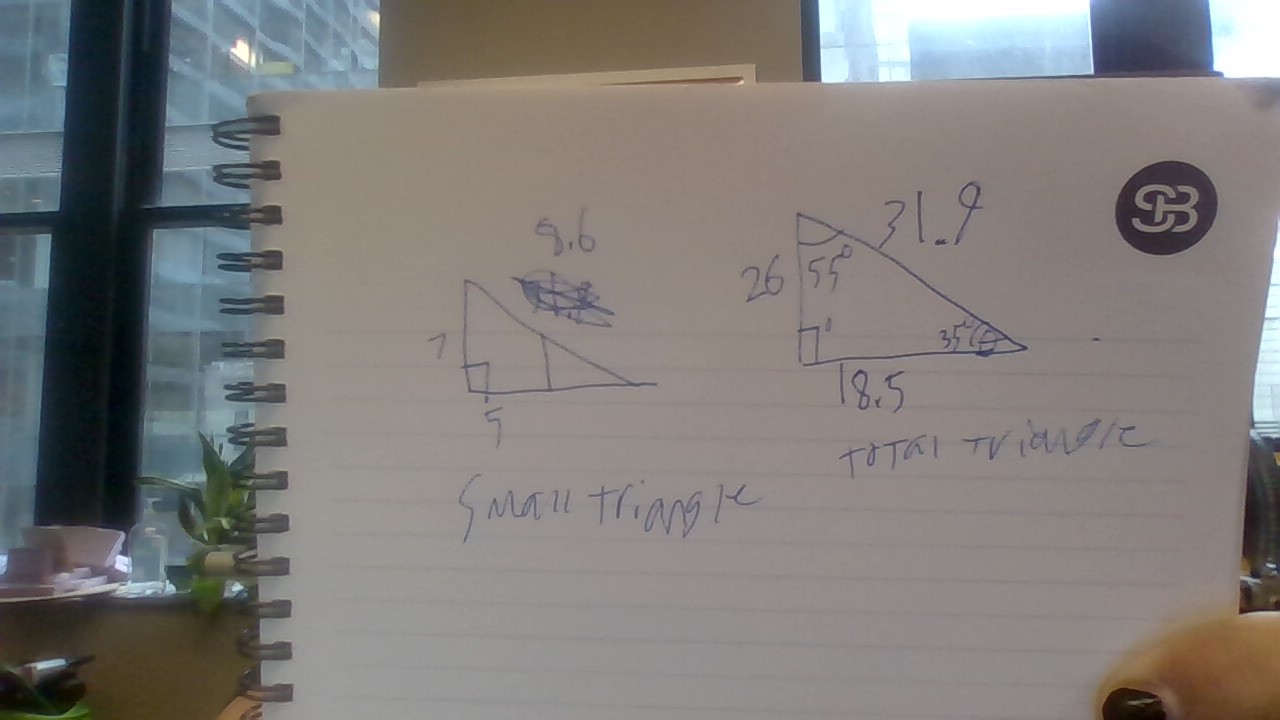
This is the 3d rendition of the bridge, its to about 1:4 scale. Its about 20 inches long, and 2.5 inches wide. We are using equilateral triangles for the main structure of our build, our sides are supported by obtuse triangles. We ended up using 70 popsicle sticks to make our bridge. Without glue being accounted for the bridge weighs 79.75 grams, or 0.07975kg. 2 6/8ths of an inch by 4 1/4ths inch triangle roughly comes out to 72.5 degrees. Its potential energy would be 1/2xmV^2, = 0.7083J, if dropped at about 90cm. Its kinetic energy is J.

NO, ROUGHLY THE TRIANGLE DESCRIBED, 2023
History

WP, BAILEY ITALY, 2023
This bridge was made in Italy in 1943, similar to the one that inspired mine, which was built by the 237 company, being the first recorded bailey bridge of WWII. The image below shows my bridge supporting 25 lbs. This was all we had time to measure, and the bridge would have held more weight given proper time for testing. Another pro of our bridge is the fact that its incredibly easy to make, deconstruct, and transport. This applies to SDG 11, in making sustainable living for everyone.

pedia, wiki. (2023, March 25). Bailey Bridge. Wikipedia. Retrieved April 24, 2023, from https://en.wikipedia.org/wiki/Bailey_bridge